





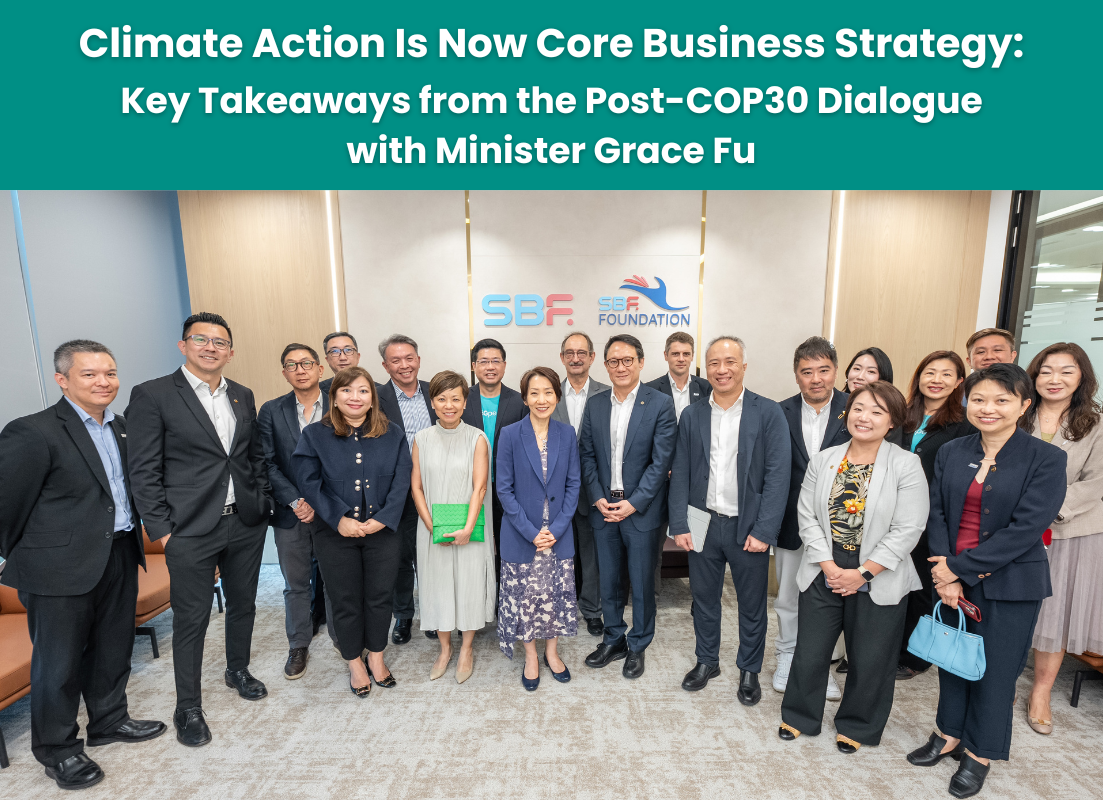
ESGpedia joined the Singapore Business Federation, Minister Grace Fu, Ambassador Ravi Menon, KPMG, Maybank and over 500 business leaders to discuss why the case for climate transition has never been stronger and what the newly announced Council for a Competitive Climate Transition (C3T) means for businesses in Singapore.
Published 24 April 2026 –
Sustainability is not a compliance checklist. It is a core business strategy. For Singapore businesses, this means embracing sustainability reporting and carbon accounting to truly understand their impact, pave better green transition pathways, and build long-term resilience.
That conviction, one we at ESGpedia have advocated since day one, was the unmistakable thread running through the Post-COP30 Dialogue with Ms Grace Fu, Minister of Sustainability and the Environment, organised by the Singapore Business Federation (SBF) in partnership with ESGpedia, KPMG, Maybank, and the Sustainability Alliance.
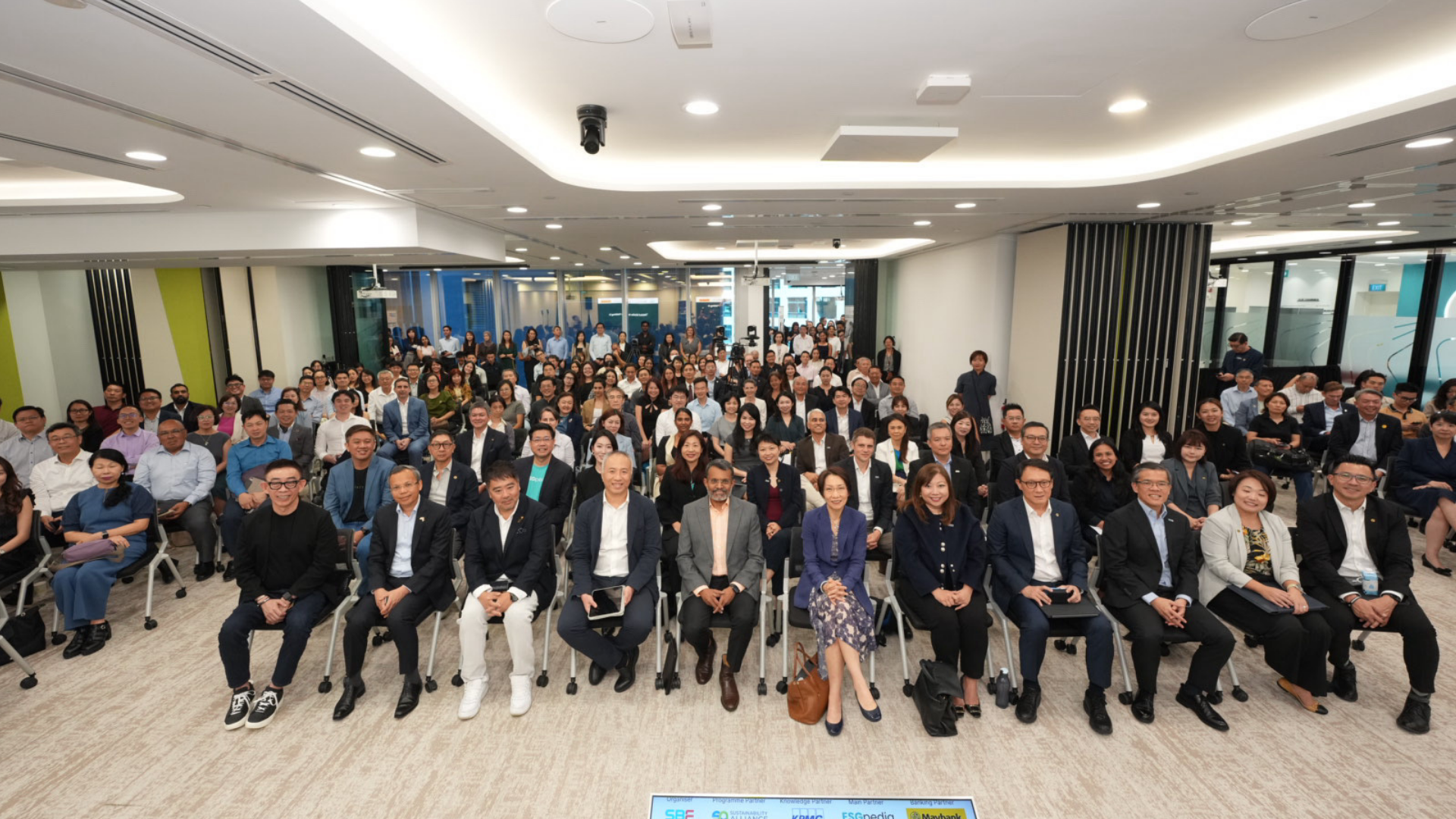
The event brought together more than 500 business leaders, policymakers and sustainability professionals to examine what the outcomes of COP30 mean for companies operating in Singapore, and how the private sector should respond to a climate landscape defined as much by geopolitical uncertainty as by physical and transition risk.
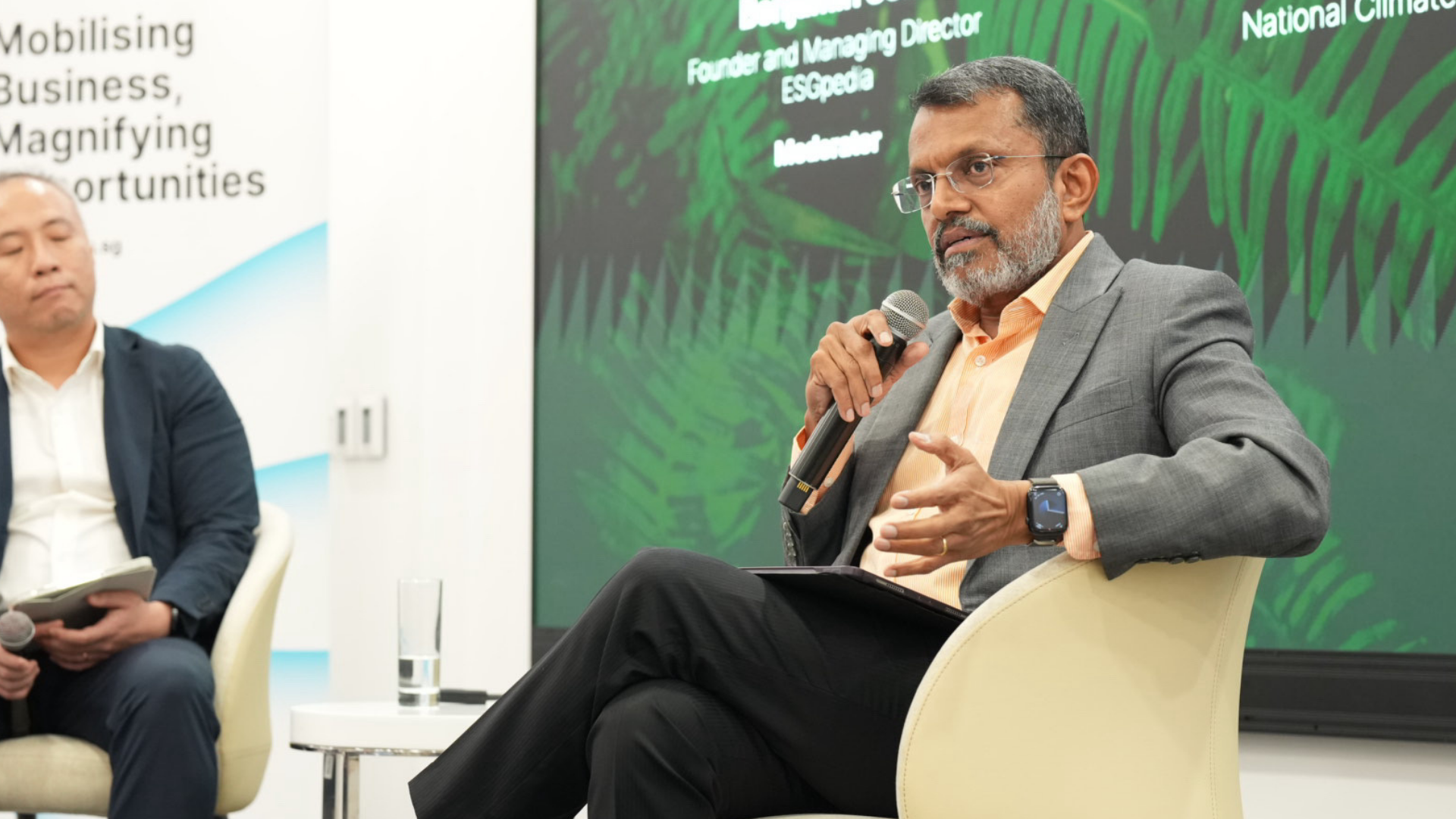
ESGpedia Founder and Managing Director Benjamin Soh moderated a fireside chat with Ravi Menon, Singapore’s Ambassador for Climate Action, and joined the broader discussion alongside Minister Grace Fu, KPMG, and Maybank.
Below, we share the most important takeaways from the day and what they mean for businesses navigating the climate transition.
1. 2026 is Singapore’s Year of Climate Adaptation
Minister Grace Fu opened the dialogue by highlighting that COP30 was very much a COP focused on implementation, and that a significant outcome was the adoption of a global framework for adaptation comprising 59 agreed indicators.
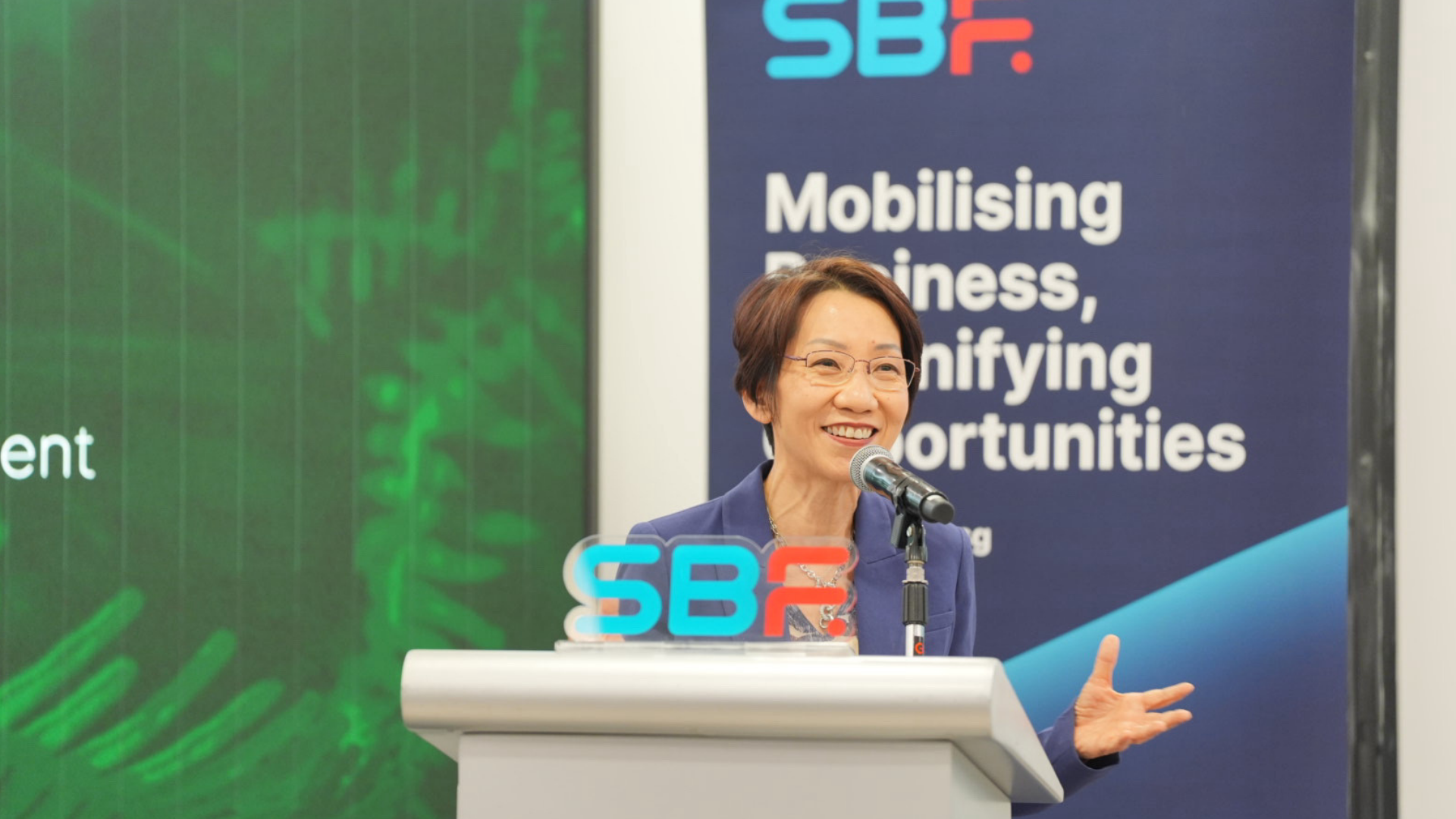
For Singapore and for businesses operating here, this has immediate implications. The government has designated 2026 the Year of Climate Adaptation, signalling a coordinated push to translate those global indicators into national and sector-specific action.
Her central message to the business community was direct: adaptation is not a future problem, and no company should assume it is handled by the government alone.
Minister Grace Fu shared, “We need to ask ourselves: do you have a BCP for climate? Are you operating in a country or a place that has a BCP? What if there’s no water? What if there’s too much water? What if there’s too much heat that reduces the efficiency of your data centre? The government can only do so much. We cannot have your BCP done for you.”
She further emphasised that climate risk is increasingly being priced into business decisions through investment, loans, and insurance.
She cited a recent conversation with a global MNC investing in Singapore where the company explicitly named water availability as a decisive factor.
“We don’t want to invest in a place where we have to tell our local community that I’m taking the next drop of water from them,” the executive told her.
Adaptation, in other words, is already a differentiator.
2. A New Partnership Platform: The Council for a Competitive Climate Transition (C3T)
One of the headline announcements of the day was the formation of the Council for a Competitive Climate Transition (C3T), co-chaired by Ambassador Ravi Menon and SBF Chief Executive Officer Mr Kok Ping Soon.
The Council is designed as a structured public-private partnership to align government policies with business realities, unlock enterprise value from transition action, and solve the data problem that holds so many companies back.
Ambassador Ravi Menon, speaking during the fireside chat, outlined three priorities for the Council:
- Aligning policies with business realities, translating sectoral transition pathways into implementation solutions companies can act on
- Solving the data problem, bridging the gap between macro data held by government and the asset, supply chain, and workforce-level data that only businesses have
- Linking transition action to enterprise value, using procurement and financing as concrete incentives so companies can realise the commercial upside of climate action
Building on this, ESGpedia MD Benjamin Soh noted, “We believe that C3T will be a useful partnership platform for business leaders to voice feedback. It will also provide tools, collective expertise, and collaboration so that we can deliver climate action in a meaningful way, keeping Singapore businesses competitive.”
3. Climate Risk Is Business Risk — and the Geopolitical Context Strengthens the Case
In the fireside chat, Ravi Menon addressed the question on many business leaders’ minds: why persist with climate transition planning amid geopolitical instability, energy market volatility, and shifting global commitments?

His answer was unequivocal. The current environment strengthens the case.
“Climate risk is business risk. It is a core competitiveness strategy. The case is as strong as ever for persisting in transition planning and to pursue climate action because of the global situation,” he said.
He framed this through energy security. The current oil and gas system carries significant concentration risk, both geographically and through physical choke points.
Historical oil shocks in 1973, 1980, and 2022 all ended the same way. Countries and companies that prepared early emerged with the clearest advantage. He cited Spain, Pakistan, and China as examples of economies that invested in renewables early and are now better positioned to absorb shocks.
“Energy security is environmental sustainability.”
The two are now mutually reinforcing.
He also pointed to a less discussed reality. Carbon pricing is expanding, not retreating. A decade ago, 10% of global emissions were subject to carbon pricing. Today, that figure stands at 25%, with new schemes emerging across Asia.
Combined with the rapid decline in renewable energy costs, the transition risks of inaction now outweigh the short term costs of action.
4. The Regulatory and Commercial Tide Is Rising for ISSB Reporting
Opening the fireside, Benjamin set the context clearly. Whether or not a company sees sustainability as strategic, the environment is making climate action unavoidable.
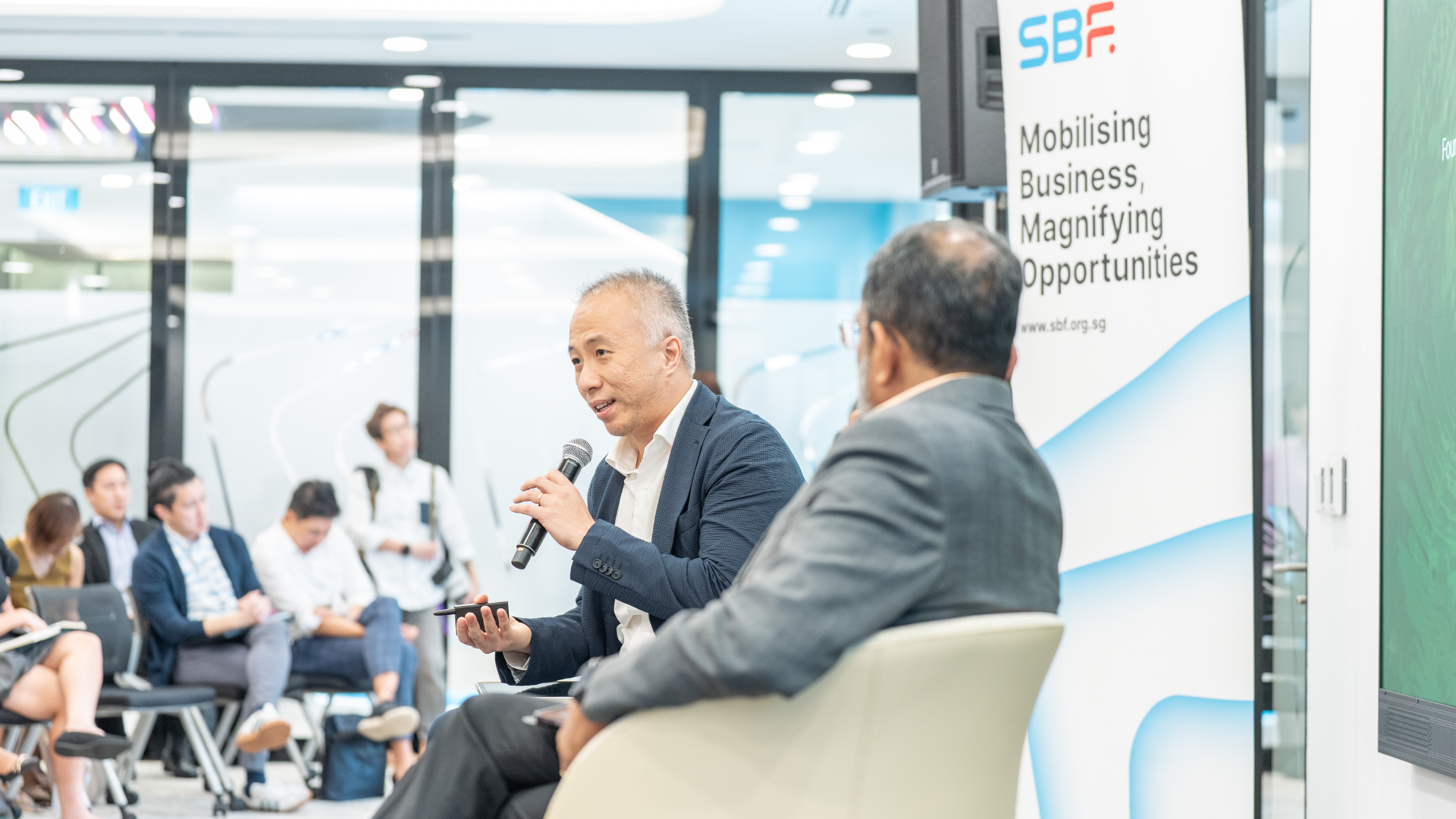
Despite the delay of full climate disclosures for smaller firms, the shift toward ISSB reporting is accelerating, as Singapore implements mandatory climate disclosures for all listed issuers by FY2025 and large non-listed companies by FY2027.
Other regulatory developments spanning across both public and private sectors, as well as international markets, are compelling companies to consider transition planning and produce climate disclosures:
- Public sector green procurement is expanding rapidly. Singapore’s Ministry of Finance has mandated sustainability considerations in procurement by 2028.
- Climate disclosures are going mainstream, with ISSB-aligned reporting now required for large listed companies.
- Cross-border carbon pricing is operational, with mechanisms like the Carbon Border Adjustment Mechanism (CBAM) already affecting exporters.
- Private sector procurement is moving faster, with 5 to 10% of tender criteria now involving sustainability reporting.
At ESGpedia, more than 100 companies in the past year alone have approached the team to produce climate disclosures specifically for procurement purposes.
5. What This Means for Business and How ESGpedia Supports Your Sustainability Reporting Journey
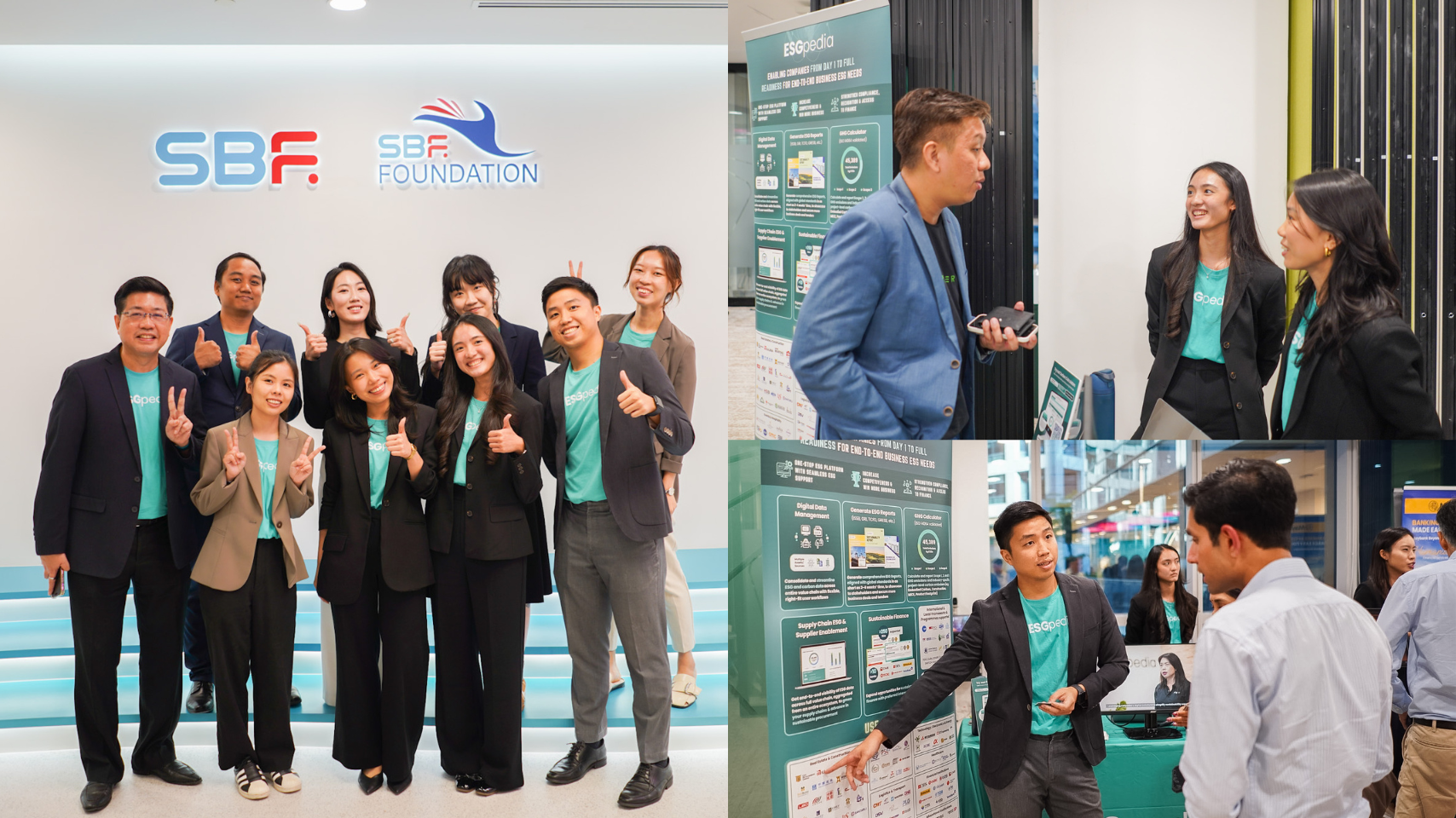
Ambassador Ravi Menon put it simply. “What gets measured gets managed. The first step is to measure and then to disclose.”
This is the gap ESGpedia was built to close.
As a Full Licensee of the Singapore Emissions Factors Registry (SEFR), ESGpedia has supported more than 800 Singapore companies on carbon accounting using over 320 localised emission factors.
Clients consistently highlight improved accuracy and stronger alignment with regulatory and procurement requirements.
Scaling Sustainability Reporting and Sustainable Finance with Real Use Cases
Beyond measurement, ESGpedia supports data-driven sustainable finance, having supported over ten financial institutions across Asia, including CIMB, Maybank, OCBC, and the Mongolian Sustainable Finance Association (MSFA) to deliver more than 250 Sustainability-Linked Loans (SLLs) within a year.
By enabling structured data collection, emissions tracking, and monitoring of Sustainability Performance Targets (SPTs), the platform helps companies align with financing requirements, many of which are increasingly driven by procurement requirements and supply chain expectations, where sustainability became a deciding factor.
Across the past year, engagement has grown significantly across both multinational corporations and SMEs, with a consistent need to communicate sustainability data more effectively to customers.
6. Looking Ahead: Transition Together
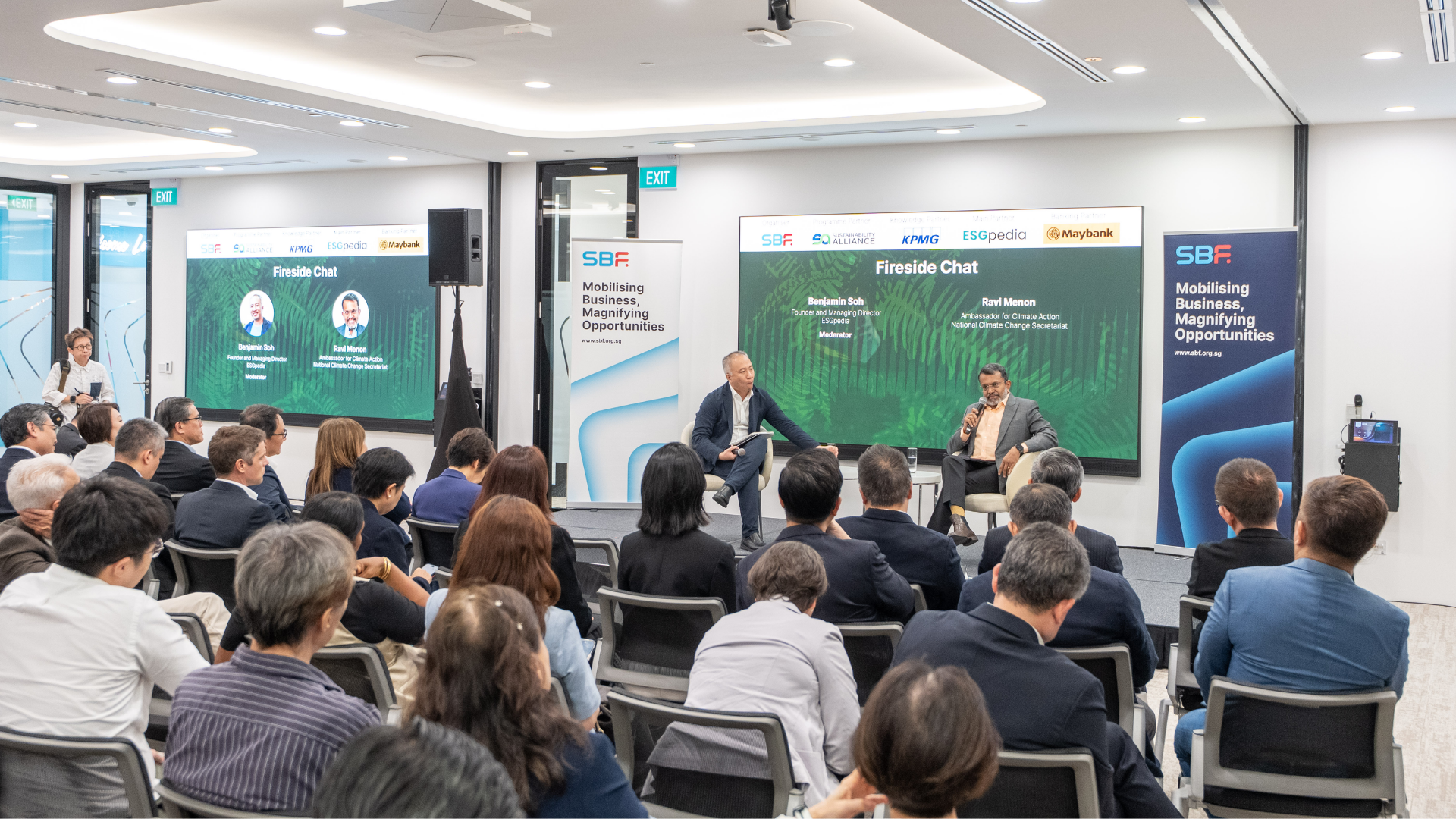
In his closing remarks, Ambassador Ravi Menon offered a practical perspective.
“Early movers will get a disproportionate advantage. Take small steps. Identify risks. Measurement is one of the early steps, then develop transition plans.”
The message is clear for businesses. Sustainability is not a cost centre. It is not just reporting.
It is a competitiveness strategy. It is enterprise risk management. It is access to capital, customers, and tenders. It is the foundation of future ready businesses.
ESGpedia looks forward to supporting the C3T platform and helping businesses advance their climate transition journeys in a way that is practical, measurable, and commercially meaningful.
To explore how ESGpedia can support your organisation’s ISSB reporting, carbon accounting, and sustainability-linked financing journey, speak with one of our sustainability experts.
To access the Singapore Emissions Factors Registry (SEFR), visit NetZeroHub.SG.